Collecting practice ? Evidence file
How to Read a Gallery Exhibition: A First-Timer's Guide
What a gallery exhibition is, how the gallery uses the exhibition to introduce the work, what the collector looks for, and how the visit leads to a considered acquisition.
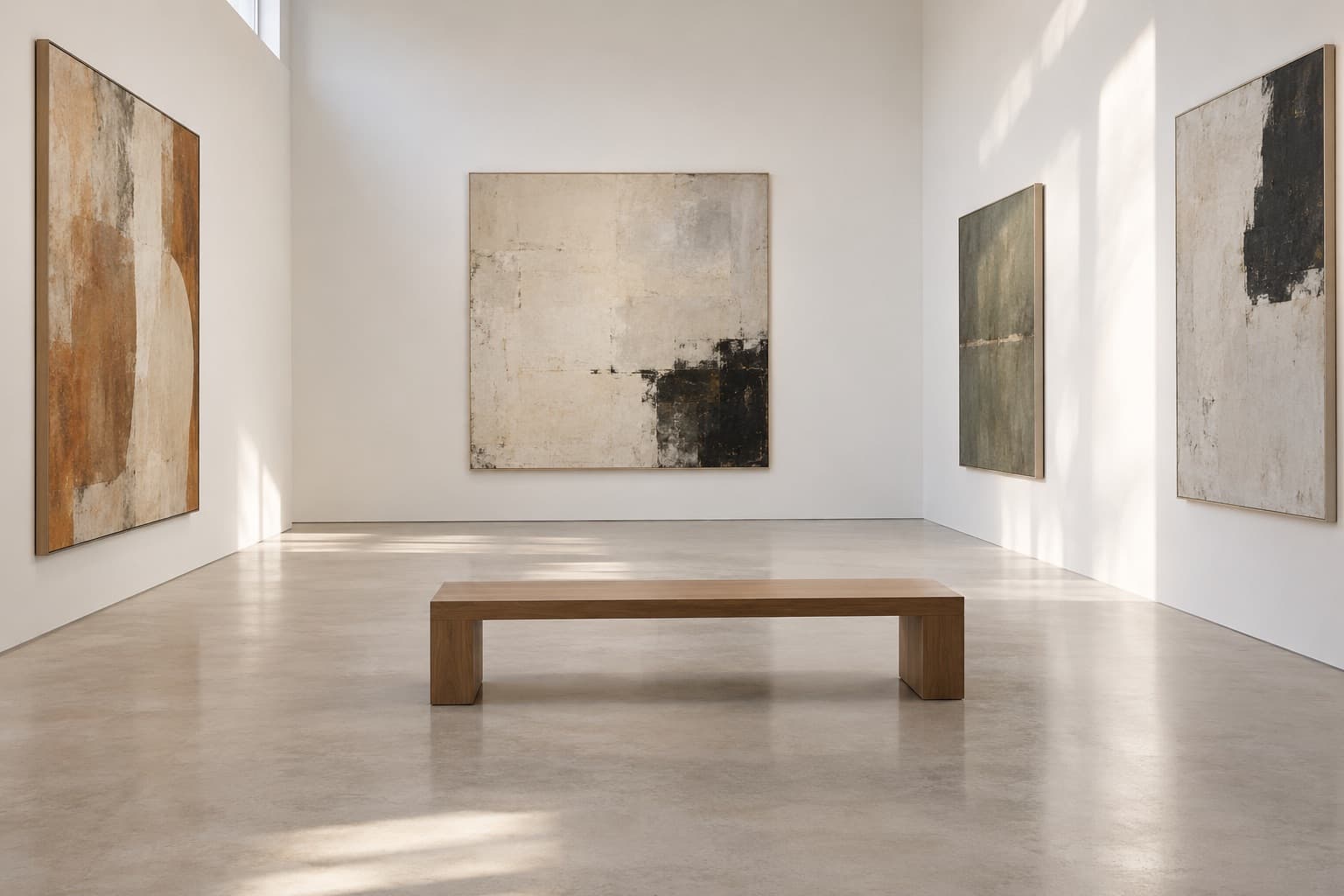
- 01A gallery exhibition is the gallery's primary way of introducing an artist's work to the market, and the exhibition is a curated argument for the artist's practice.
- 02The collector's role at an exhibition is to read the work, to read the gallery's argument, and to decide whether the work fits the collection's strategy.
- 03The conversation with the gallery is part of the work: the collector's questions help the gallery understand the collector, and the gallery's answers help the collector understand the artist.
- 04An exhibition is a starting point, not a closing argument; the work that interests the collector deserves a second look, a research file, and a due-diligence process before any acquisition is made.
What a gallery exhibition is
A gallery exhibition is the gallery's primary way of introducing an artist's work to the market. The exhibition is a curated argument for the artist's practice: the gallery selects the works, arranges the works in the gallery's space, produces a press release and a checklist, and hosts an opening reception. The exhibition runs for a defined period (usually three to six weeks), and the works are usually available for acquisition during the run of the exhibition.
The exhibition is a significant investment by the gallery, and the gallery's commitment to the artist is part of the work's context. A collector who attends the exhibition is attending a curated argument, and the collector's role is to read the argument and to decide whether the argument is convincing.
▲ SOURCE CONTEXT REQUIREDReading the work
The first task at an exhibition is to read the work. The collector looks at each work in turn, asks what the work is doing, asks what the work is asking of the viewer, and asks what the work would do in the collector's home or in the collector's collection. The collector is not looking for a verdict; the collector is looking for a relationship between the work and the collection.
A first-time gallery visitor often feels pressure to have an immediate reaction. The pressure is misplaced. The collector's role at the exhibition is to gather information, not to make a decision. The decision comes after the visit, with the research file, the due-diligence process, and the conversation with the advisor.
▲ SOURCE CONTEXT REQUIREDReading the gallery's argument
The second task is to read the gallery's argument. The collector reviews the press release, the checklist, the catalogue (if any), and the wall text. The collector asks what the gallery is saying about the artist, what the gallery is saying about the works in the exhibition, and what the gallery is saying about the artist's place in the market.
The gallery's argument is not necessarily the collector's argument, and a credible collector takes the argument seriously without accepting it uncritically. A collector who is too credulous accepts the gallery's argument as the work's truth; a collector who is too sceptical rejects the argument without engagement. The right posture is engaged curiosity, with the work itself as the primary evidence.
▲ SOURCE CONTEXT REQUIREDThe conversation with the gallery
The conversation with the gallery is part of the work. The collector's questions help the gallery understand the collector, and the gallery's answers help the collector understand the artist. A good conversation is a two-way exchange, and a credible gallery treats the collector's questions seriously, regardless of the collector's experience or the work's price.
The collector's questions should be open-ended: what is the work doing, what is the work asking of the viewer, what is the artist's broader practice, what other works are available, what is the price, what is the documentation, and what is the artist's history. A collector who is shopping for a single work is a collector who is missing most of what the gallery can offer.
▲ SOURCE CONTEXT REQUIREDFrom exhibition to acquisition
The exhibition is a starting point, not a closing argument. A work that interests the collector deserves a second look, a research file, and a due-diligence process before any acquisition is made. The second look can be a return visit, a studio visit, or a conversation with the artist. The research file is the framework the collector (and the advisor) will use to evaluate the work. The due-diligence process is the work's authentication, provenance, condition, and title review.
A collector who buys at the opening reception, on the strength of the gallery's argument, is a collector who is buying the gallery's argument rather than the work. A collector who buys after the second look, the research file, and the due-diligence process is a collector who is buying the work. The first collector is exposed to the gallery's biases; the second collector is exposed to the work's actual record.
▲ SOURCE CONTEXT REQUIREDWorking with an advisor at the gallery
An advisor's role at the gallery is to support the collector's reading of the work, the gallery's argument, and the conversation. The advisor is not there to make the decision; the collector is. The advisor is there to ask the questions the collector would not think to ask, to identify the issues the collector would not see, and to document the visit in a form the collector can reference later.
A first-time gallery visitor with an advisor is a visitor who gets the most out of the visit. The advisor's presence is not a sign of inexperience; it is a sign of seriousness. The gallery treats the visit differently, the conversation goes deeper, and the collector walks away with a clearer sense of the work, the artist, and the market.
▲ SOURCE CONTEXT REQUIRED- 01The Art Basel and UBS Global Art Market Report 2026Art Basel and UBS ? Accessed August 13, 2026
- 02Collaboration with the Art MarketUNESCO ? Accessed August 13, 2026
Educational editorial content reflecting the author's professional perspective. Not legal, tax, appraisal or investment advice. No specific artwork, seller or transaction paid for inclusion.
Full policy ↗